
DNA Testing
When genetics helps reconnect family histories
DNA testing is a complementary tool in the search for origins. It can help identify biological relationships between adopted persons and their families of origin, particularly when available documents are incomplete or traditional research methods have not produced results.
Why use DNA testing?
DNA is an additional tool for discovering your origins.
For many adopted persons of Haitian origin, searching for their biological families can be a complex process. Information contained in adoption records may be insufficient, inaccurate or difficult to verify.
In certain situations, DNA testing can help identify genetic matches and open new avenues of investigation. Voie d’Espoir incorporates this approach into its documentary research and field investigations, in collaboration with its partner, Plan Kiskeya.
1. Identify biological relationships
Search for genetic matches that may reveal biological relationships between individuals.
2. Advance family searches
Explore new leads when available documents and testimonies are insufficient to identify a family.
3. Facilitate potential family reunions
Help establish biological relationships that may subsequently require additional verification and appropriate support.
Our DNA testing programme
A collaboration between Voie d’Espoir and Plan Kiskeya.
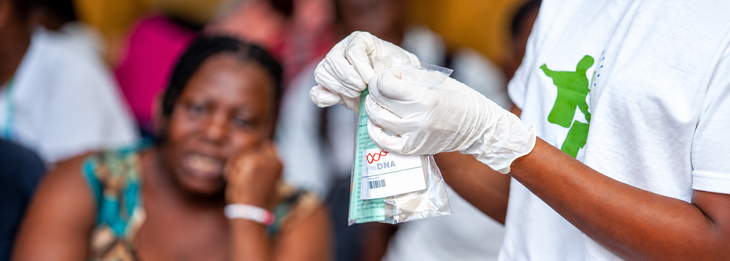
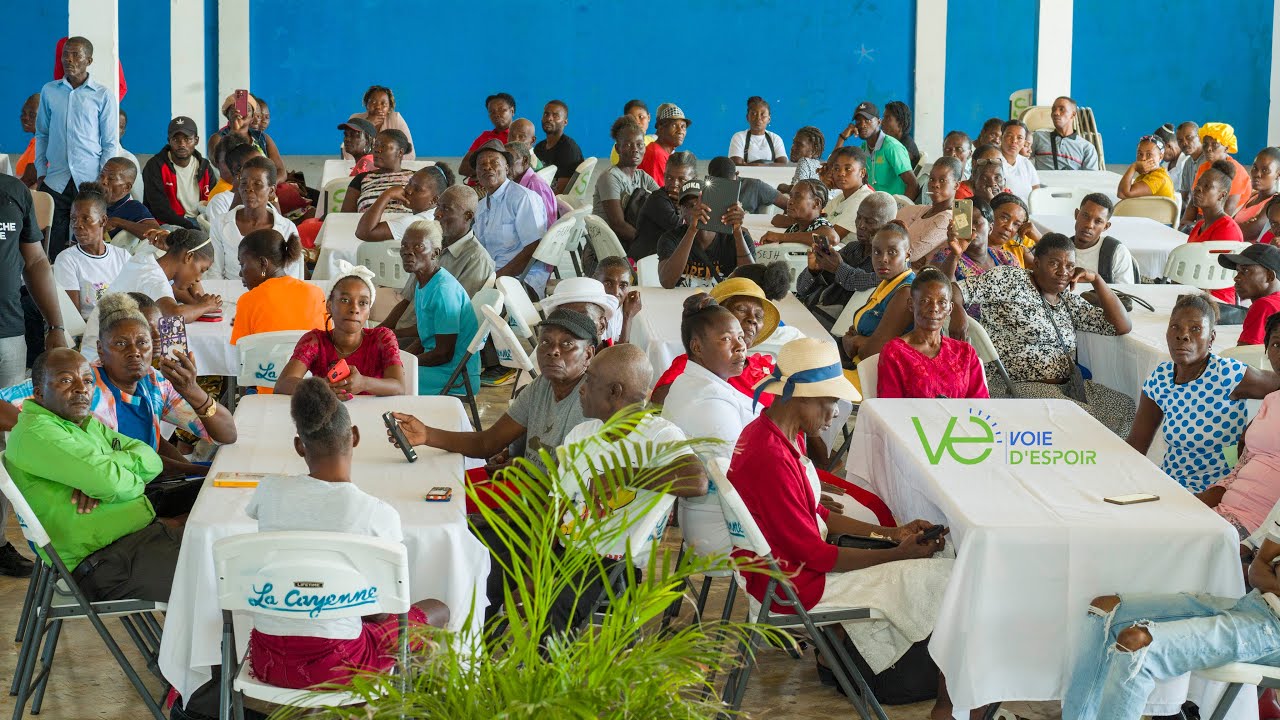
Through its partnership with Plan Kiskeya, based in the Netherlands, Voie d’Espoir helps organize DNA sample collection activities among biological families in Haiti. Our team is responsible for identifying and registering families, collecting the necessary information and organizing sample collection with their consent. The samples are sent to the United States for analysis by FamilyTreeDNA. Plan Kiskeya subsequently contributes to managing genetic matches and using the results to support family searches. These results can then be compared with documentary evidence and information gathered during field investigations.
Our technical partners
- Voie d’Espoir: Family registration, DNA sample collection and field investigations in Haiti.
- Plan Kiskeya: Coordination and identification of genetic matches.
- FamilyTreeDNA: Genetic analysis.
How does DNA testing work?
DNA sample collection in Jérémie
What you should know before taking a DNA test
A DNA test does not guarantee family reunification
- Results depend, among other factors, on whether biological relatives are represented in the genetic database being used. The absence of an immediate match does not necessarily mean that a biological relationship cannot be identified in the future.
Your consent is essential
- Before any sample is collected, you must understand the purpose of the test, its limitations, the possible implications of the results and how your data will be used.
Protecting your privacy
- Genetic information is sensitive. Our team explains how your information will be processed and under what conditions it may be shared with the relevant partners.
Frequently Asked Questions (FAQ)
Your DNA could help advance a family search.
Are you an adopted person of Haitian origin or a member of a biological family? Contact our team to learn more about DNA testing and the search for origins.