
Voie d’Espoir and the Consulate General of Haiti in Paris Open Dialogue on the Search for Origins and the Rights of Adoptees
As part of its European mission, Voie d’Espoir met with representatives of the Consulate General of Haiti in Paris on Wednesday, October 28, 2026. Discussions focused on supporting adoptees of Haitian origin, their access to identity documents, and the legal challenges surrounding recognition of their original parentage. The meeting opened up opportunities for cooperation to better guide adoptees through administrative procedures with Haitian institutions.
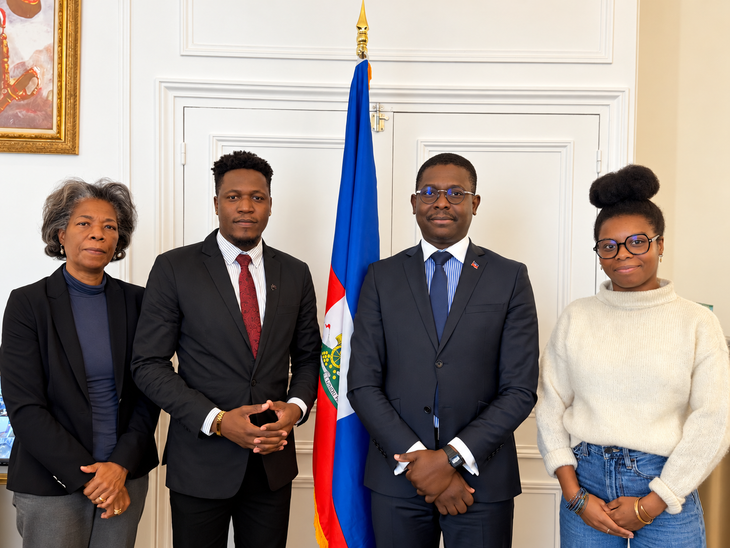
On Wednesday, October 28, 2026, Michel Joseph, founder of Voie d’Espoir, accompanied by Clotilde Hudry, an ambassador of the organization and herself an adoptee of Haitian origin, was received at the Consulate General of Haiti in Paris. The delegation met with Mr. Jean Jocelyn Petit, Acting Consul in Charge, and Ms. Kethline Lindor to discuss issues related to the search for origins, identity, and administrative support for people adopted abroad.
The visit was primarily intended to present Voie d’Espoir’s work, its investigation methods in Haiti, and opportunities for cooperation with Haitian diplomatic and consular missions.
For several years, the organization has supported adoptees searching for their families while also working with biological families in Haiti. Its activities include reviewing adoption records, collecting testimonies, conducting field investigations, verifying information, and providing mediation when family reunions become possible.
Voie d’Espoir believes that diplomatic and consular missions can play an important role in this process, particularly when searches require civil status documents, administrative verification, or referrals to the competent authorities in Haiti.
The Consulate and Requests Concerning Identity
During the discussions, consular representatives described the requests they receive from adoptees of Haitian origin. Some wish to find their biological parents or reconnect with their families of origin. Others seek documents confirming their birth in Haiti, a better understanding of their legal status, or assistance with procedures relating to Haitian nationality.
These requests raise questions that extend beyond family searches alone. For someone adopted abroad, rediscovering their origins may also mean recovering their administrative identity, obtaining access to their birth certificate, understanding changes made to their civil status, or determining the conditions under which their nationality of origin may be recognized.
However, these procedures sometimes encounter complex legal and administrative obstacles, particularly when adoption has resulted in changes to legally recognized parentage.
Full Adoption: A Legal Issue at the Heart of the Discussions
One of the main topics addressed during the meeting concerned the consequences of Haiti’s adoption reform. The law of November 15, 2013, published in the official gazette Le Moniteur, substantially changed the legal framework governing adoption in Haiti.
In particular, the law provides that intercountry adoption takes the form of full adoption. Unlike simple adoption, which preserves the legal parent-child relationship with the family of origin, full adoption replaces the previous legal parentage with a new one. It therefore permanently severs the legal ties of parentage with the biological family, even though blood relationships, personal history, and the child's origins remain realities that cannot be erased.
This provision, which applies to adoptions governed by the new law, raises important questions today for adoptees who wish to reconnect with their Haitian identity as adults.
How can individuals access certain civil status documents when their original parentage has been legally replaced? What steps can they take to have their birth identity recognized? What options are available for obtaining Haitian documents or establishing their legal status regarding nationality?
The question of nationality, however, requires an essential distinction: the legal severance of biological parentage does not, in itself, automatically result in the loss of Haitian nationality. Each person's situation must be assessed in light of the applicable rules and available documents. These difficulties highlight the need for better information and administrative assistance tailored to adult adoptees.
Renewing the Debate on Adoptees’ Rights
For Voie d’Espoir, the issues raised during this meeting call for broader institutional reflection. The 2013 reform strengthened the regulation of adoption procedures and child protection mechanisms. However, it also highlights the need to examine the circumstances of adoptees after they reach adulthood, particularly when they wish to access their personal history and exercise rights connected to their country of birth.
The organization considers it important to renew dialogue among Haitian authorities, diplomatic missions, legal experts, and organizations supporting adoptees. This reflection should focus particularly on access to archives and original documents, recognition of personal identity, nationality-related procedures, and administrative processes available from abroad.
The aim is not to challenge the family relationships established through adoption, but to better address the rights and needs of adoptees who wish to reconnect with their country of birth as adults. For Voie d’Espoir, protecting children at the time of adoption and recognizing their rights in adulthood should form part of a coherent approach.
Toward Better Coordination Between Voie d’Espoir and the Consulate
At the end of the meeting, Voie d’Espoir and representatives of the Consulate General of Haiti in Paris expressed their willingness to continue discussions in order to identify appropriate mechanisms for cooperation.
One of the main objectives is to make it easier to guide adoptees who contact the consulate regarding their search for origins or administrative procedures. This could lead to a more direct communication channel between consular services and Voie d’Espoir, while respecting each institution's responsibilities, the confidentiality of case files, and the consent of the individuals concerned.
The consulate could therefore help refer certain requests to specialized organizations, while Voie d’Espoir could contribute its field expertise to family searches requiring investigations in Haiti. The details of this coordination remain to be defined, but it offers a possible way to prevent adoptees from having to navigate complex procedures on their own.
An Institutional Initiative Pursued in Haiti and Abroad
The visit to the Consulate General of Haiti in Paris forms part of Voie d’Espoir’s broader efforts to strengthen dialogue with public institutions, both in Haiti and abroad. In early October 2026, the organization had already taken a step toward closer institutional cooperation by signing a collaboration agreement with the Ministry of Haitians Living Abroad (MHAVE).
This initiative reflects Voie d’Espoir’s determination to give greater consideration to the search for origins, identity, and family reconnection in discussions with the relevant Haitian institutions. The European mission of October 2026 continues this approach through meetings with competent authorities, organizations specializing in intercountry adoption, and partners involved in post-adoption support. In the Netherlands, Belgium, and France, discussions have focused particularly on access to records, cooperation among stakeholders, family search procedures, and the needs of adoptees in their countries of residence.
The meeting at the Consulate General of Haiti in Paris adds a particular dimension to these discussions: the role that Haitian institutions abroad can play in preserving the connection between adoptees and their country of birth. Beyond family searches, one question remains: how can a person born in Haiti and subsequently adopted abroad regain full access to their personal history, original documents, and the procedures needed to assert their rights?
For Voie d’Espoir, this question now calls for a collective response based on institutional dialogue, clearer procedures, and recognition of the needs of those concerned. Adoption may legally change a person's parentage. It should never prevent them from accessing their history or deprive them of the opportunity to understand their origins.