
Marie Abigaëlle: Finding Her Way Back to Her Haitian Roots
Adopted in Belgium and now living in the Netherlands, Marie Abigaëlle Mayard has never returned to Haiti since her adoption. Yet the country she knows mainly through stories, documents, and images continues to hold a special place in her life. On Sunday, October 25, 2026, we met her in Rotterdam at the initiative of Plan Kiskeya, as part of Voie d’Espoir’s European mission. It was a meeting filled with memories, questions, and the desire to reconnect with a family from whom she was separated more than twenty years ago.
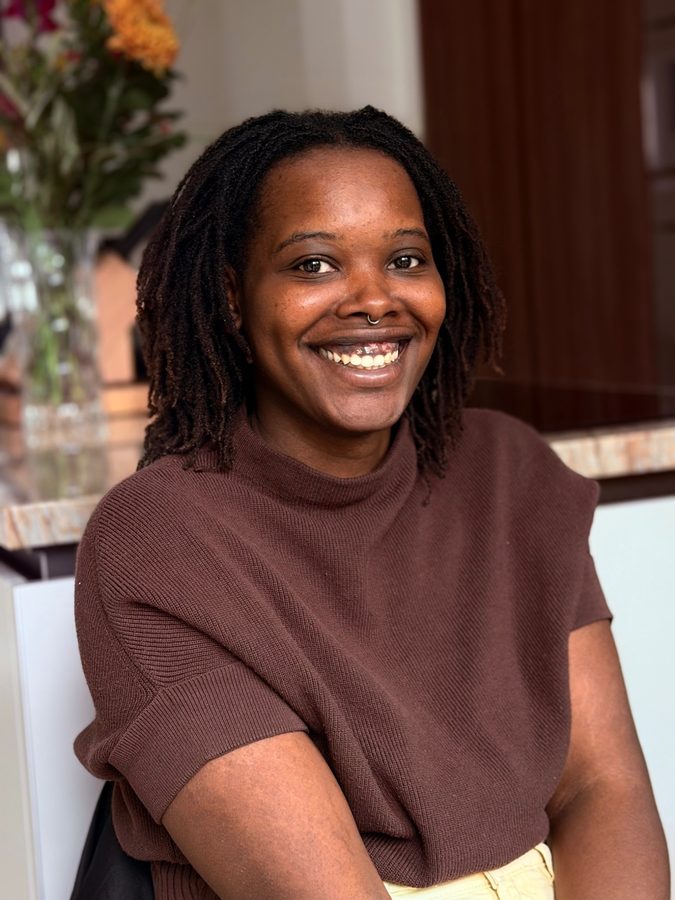 The sky is mostly cloudy. The temperature is around 12 degrees Celsius. A cool breeze accompanies this autumn afternoon in the Dutch city where we are about to meet a young woman whose story began thousands of kilometers away, in the Caribbean.
Her name is Marie Abigaëlle Mayard. When she arrives, her smile immediately catches our attention. A broad, spontaneous, and warm smile that gives our meeting an almost familiar sense of ease. Her hair is styled in dreadlocks. She wears a dark brown top, pale yellow jeans, and a pair of green-and-white sneakers. She has brought a folder containing documents carefully preserved since her adoption: her birth certificate, adoption records, and a report detailing her social and family history.
A few pages recounting the earliest years of a life. Names, dates, places, and circumstances that now provide the first clues in her search. But behind these documents lies a much larger story: that of a young woman seeking to understand where she comes from.
A childhood in Haiti, a life built in Europe
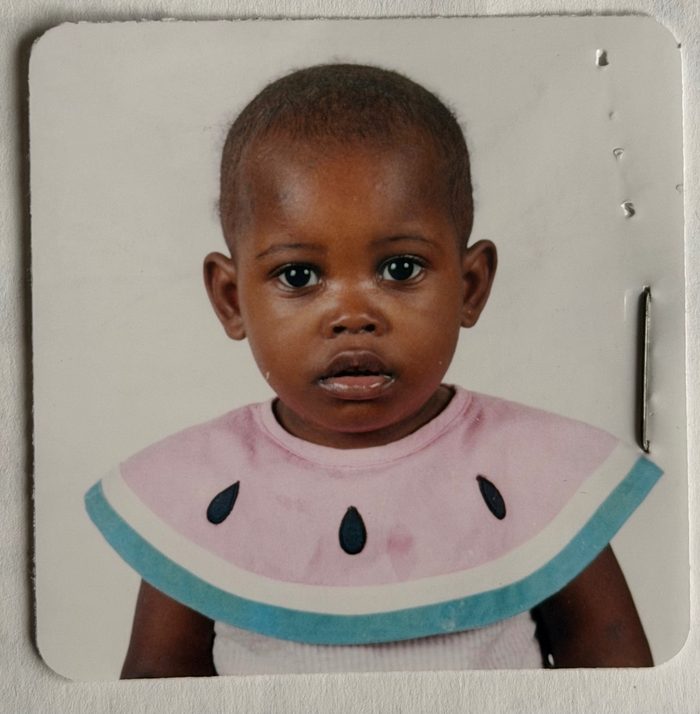
Marie Abigaëlle was born on April 22, 2001, in Port-au-Prince, Haiti. According to her adoption file, she was entrusted at a very young age to the Fondation pour les Enfants d’Haïti. Her social history report describes the economic difficulties her biological mother was facing. According to the document, her mother decided to place her daughter for adoption in the hope of securing a better future for her.
It was a decision made in a context of severe economic hardship, as described in many international adoption files from that period. Yet behind administrative explanations, there are always more complex human realities, circumstances that deserve to be understood, and stories that cannot be fully captured in a few lines of a report.
Adopted by a Belgian family, Marie Abigaëlle grew up in Europe. She now lives in the Netherlands. Her older brother was also adopted and lives in Spain.
Two journeys, two countries, but shared roots in Haiti.
In her everyday surroundings, Marie Abigaëlle has relatively little contact with Haitians, apart from a few cousins who were also adopted abroad. Yet this geographical and cultural distance has never diminished her interest in her origins.
On the contrary, over the years, the desire to understand her story has become a deeply personal need.The documents Marie Abigaëlle has carefully preserved contain several important details about her family history.
According to the social report prepared at the time of her adoption, her biological father is named Maxo MAYARD, originally from Port-au-Prince.
Her biological mother, Antoinise PIERRE, is originally from Belle-Anse, a commune in Haiti’s South-East Department.
The document also indicates that Antoinise Pierre was the eldest of eight children.
At that time, some of her siblings lived in Port-au-Prince, while others remained in Belle-Anse with their parents.
This information dates back more than twenty years. It therefore does not establish where the individuals concerned live today, but it provides valuable leads for further research.
For Marie Abigaëlle, these names and places represent far more than details recorded in a file.
They are the first tangible connections to people she hopes to know and to a part of her history that has remained inaccessible until now.
During our conversation, we ask her a question:
How does she imagine Haiti, the country where she was born but has never had the opportunity to revisit?
Marie Abigaëlle does not hide the fact that many of the images reaching her from Haiti are troubling.
Online, she mostly encounters news about violence, insecurity, poverty, and the crises affecting the country.
She understands the concerns that traveling to Haiti under current circumstances may raise.
But her answer comes without hesitation:
“I still want to go.”
These simple words express a profound aspiration.
For Marie Abigaëlle, Haiti is much more than the images shown in the media or on social networks.
It is also the country of her birth, the place where her life began, and perhaps the home of people who still share part of her story.
She wants to discover it differently.
To see its landscapes. To meet its people. To understand its culture.
And above all, to reconnect with a part of her identity that she did not have the opportunity to explore while growing up.
Our conversation goes far beyond adoption.
Marie Abigaëlle is curious about everyday life in Haiti. She asks about customs, traditions, culture, and food.
She loves rice, a staple of Haitian cuisine.
She also tells us that she has already prepared soup joumou, the iconic dish associated with Haiti’s history and independence.
Then, smiling, she adds:
“I always have Haitian spices in my kitchen.”
It may seem like a small detail. But it is not.
Thousands of kilometers from Haiti, one's roots sometimes reveal themselves through simple gestures: trying a recipe, discovering a dish, or learning to recognize a familiar flavor.
For some adoptees, these experiences offer a way to reconnect with a cultural heritage from which they were separated at an early age.
Marie Abigaëlle did not grow up in Haiti. Yet, in her own way, she is making room for Haiti in her life.
Finding her biological parents, understanding her story
Beyond her desire to visit Haiti, Marie Abigaëlle expresses a more personal wish: to find her biological family.
She wants to understand her story, learn more about her origins, and, if circumstances allow, establish a connection with the people from whom she was separated.
Such a journey involves much more than finding an address or identifying a name.
It requires research, verification, communication, and sometimes significant emotional preparation.
For Marie Abigaëlle, the documents preserved since childhood now provide a starting point.
But the answers she seeks may also lie in the memories of people still living in Haiti.
At the end of our meeting, one thought remains.
Marie Abigaëlle has never set foot in Haiti since her adoption.
Yet, in a way, her journey toward her origins has already begun.
It began with the documents she carefully preserves. With the questions she asks herself. With the Haitian dishes she prepares in her kitchen. With her determination to discover a country she still knows so little about.
And now, with this meeting in Rotterdam.
For Marie Abigaëlle, the road ahead remains to be explored.
At Voie d’Espoir, we hope to accompany her, at her own pace, through this deeply personal journey.
Because beyond borders, years, and distances, everyone should have the opportunity to access their own history.
And perhaps one day, somewhere between Port-au-Prince and Belle-Anse, a piece of information, a memory, or a testimony will help Marie Abigaëlle recover another fragment of hers.