
Julie Sara Foulon: From Adopted Child to Woman Fighting for Justice
Adopted from Ethiopia into France at the age of six, Julie Sara Foulon grew up carrying a secret that would profoundly change her life: her biological mother, who had been declared dead, was actually still alive. Today, a filmmaker, writer, and founder of the Adoptions Justice and Reparation Collective (AJR), she is fighting for the recognition of illicit practices in international adoption, reparations for the harm caused, and the right of adopted people to know their true history. In Paris, we meet a woman determined to make a long-ignored voice heard.
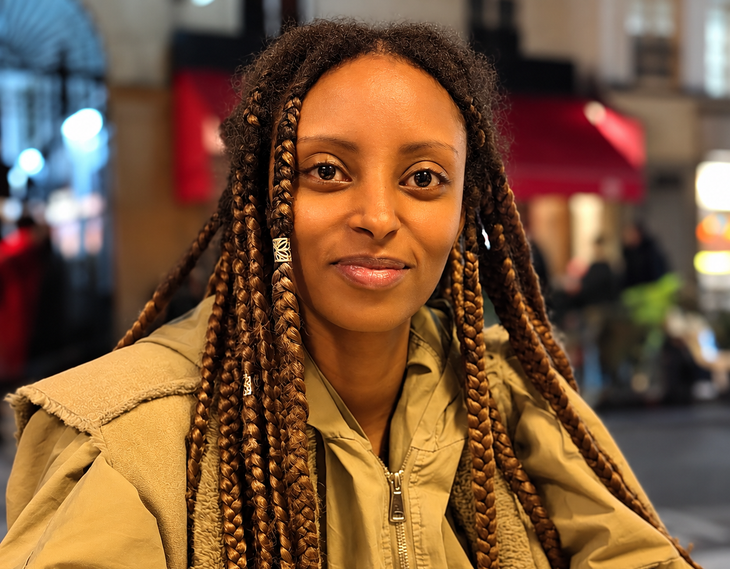
Paris. A meeting with Julie Sara Foulon offers a portrait of a woman whose personal journey has become inseparable from a collective struggle. Behind her fight for justice lies, first and foremost, the story of a six-year-old girl separated from her country, her family, and part of her identity.
In 2003, Julie Sara left Ethiopia with her younger sister to join an adoptive family in France. The adoption was arranged by the association Les Enfants de la Reine de Miséricorde. At that age, she could not yet understand the consequences of her departure. Everything happened quickly. Adults made decisions, documents were prepared, and a new life began in a country whose language and customs she did not know.
But Julie Sara carried with her a memory that administrative documents could never erase: that of her biological mother, who was very much alive.
According to her testimony, she was nevertheless instructed to say that her mother was dead. For a six-year-old child, being forced to maintain such a lie was an enormous burden. She had to learn to live in a new family while remaining silent about a truth she knew. For several years, she kept this secret. When she finally revealed it to her adoptive family, the consequences were profound.
Her account contradicted the official narrative of her adoption. How can a child develop a secure sense of identity when her own memories contradict the information contained in her file? This contradiction would leave a lasting mark on her life.
Invisible Wounds
Arriving in France meant more than simply moving to another country. For Julie Sara, it also meant abruptly losing her family, linguistic, and cultural reference points. This separation was compounded by the feeling that no one understood her. Her relationship with her adoptive parents gradually deteriorated. During adolescence, she experienced severe psychological distress, including a suicide attempt.
Her painful experience reveals an aspect of international adoption that is often insufficiently addressed: the psychological consequences of separation, particularly when the story given to a child is based on disputed or inaccurate information.
It is not simply a matter of knowing one's country of birth or finding a name. For an adopted person, searching for their origins can become essential to understanding the circumstances of their departure, restoring continuity to their life story, and making sense of memories that have long remained unexplained. Julie Sara gradually began this process of rebuilding herself.
Writing allowed her to revisit her childhood and put her experiences into words. In 2020, she published her autobiographical account, Sara et Tsega, with Éditions Baudelaire. The book marked an important turning point: her personal story began to connect with those of other adopted people questioning the accuracy of their adoption records.
Reuniting with Her Mother Twenty-Two Years Later
In 2017, a message received on Messenger opened a new chapter. Someone informed her that her biological mother was still alive in Ethiopia. This information confirmed what Julie Sara had known since childhood, but which her adoption experience had long caused others to question. Nevertheless, it was not until 2025 that Julie Sara returned to Ethiopia and reunited with her biological family in person. Twenty-two years had passed since her departure.
These reunions could not erase the years of separation. They did, however, allow Julie Sara to compare different accounts, recover elements of her history, and give her family of origin a voice.
They also strengthened her conviction that adopted people should not have to undertake such complex investigations alone to uncover the truth.
From a Personal Struggle to Collective Action
Julie Sara Foulon could have limited her efforts to finding her own family. Instead, she chose to go further. Alongside other adopted people and adoptive families, she became involved in legal proceedings against the association Les Enfants de la Reine de Miséricorde.
The complaints concern allegations including breach of trust, fraud, and practices that may have contributed to children being made available for adoption under irregular circumstances. The association disputes the allegations made against it. It is for the courts to determine any potential responsibility. But for Julie Sara, the issue extends far beyond her own case.
Through the Adoptions Justice and Reparation Collective (AJR), which she founded, she seeks to bring together people affected by potentially illicit adoptions, secure recognition of the harm they have suffered, and obtain answers from institutions. Her struggle focuses on several demands: recognition of illegal practices, access to records, establishment of the truth, accountability for those involved, and reparations for the harm caused.
She is also calling for official apologies from the French and Ethiopian governments and better support for adopted people searching for their origins. At the heart of this movement lies a fundamental question: who bears responsibility when the information used to justify an adoption turns out to be false or questionable?
For Julie Sara, organizations involved in adoption procedures cannot be exempt from accountability. Child protection cannot justify concealing essential information about a child's identity or the existence of their biological family.
Seeking Recognition of Illicit Adoptions
Julie Sara's struggle is part of a broader awareness of the irregular practices that may have affected international adoption. In France, an interministerial investigation examined these practices and the institutional responsibilities that may arise from them.
For those affected, the issue is not merely legal. It concerns their identity, family relationships, psychological well-being, and ability to understand their own life stories. Julie Sara therefore advocates an approach in which the search for origins is recognized as a right requiring concrete resources.
She calls for adopted people to have effective access to archives, appropriate support, and mechanisms for establishing the facts. Her commitment also highlights an essential reality: behind every adoption file lie several stories, that of the child, their biological family, and their adoptive family. When these stories have been constructed on inaccurate information, the consequences can last for decades.
A Voice That Refuses to Remain Silent
Today, Julie Sara Foulon continues her advocacy through public speaking, her filmmaking, and the activities of the Adoptions Justice and Reparation Collective. She belongs to a generation of adopted people who have reached adulthood and are asserting their right to participate fully in discussions and decisions concerning international adoption.
For a long time, institutions, adoption agencies, and adoptive families occupied most of the public space devoted to these issues. Now, those directly concerned are speaking out, examining their records, questioning past practices, and demanding accountability.
In Paris, this meeting with Julie Sara Foulon highlights how different the experiences of adopted people can be, while also showing how certain concerns transcend countries of origin.
For Voie d'Espoir, which supports adopted people of Haitian origin and their biological families, her testimony echoes a deeply held conviction: every search for origins must be grounded in truth, verification of information, respect for individuals, and recognition of their right to know their history.
Julie Sara's journey also demonstrates that finding one's biological family does not necessarily mean the journey is over. After reunification, other questions may arise: Why did the separation occur? Who knew what? What documents were produced? Who should be held accountable for the harm suffered?
Julie Sara Foulon continues to seek answers. But today, she is no longer fighting solely for the six-year-old girl who left Ethiopia in 2003. She is also fighting for all those who, as adults, discover that their stories may have been altered, concealed, or told without their ever having the opportunity to make their own truth heard. Her struggle is driven by one demand: knowing one's origins should never depend on chance, and obtaining justice should never be a privilege.